Share this program >
SPECTACLE COLLECTIVE PRESENTS
Common Chords
THE NEW GENERATION OF CHILEAN CLASSICAL MUSIC

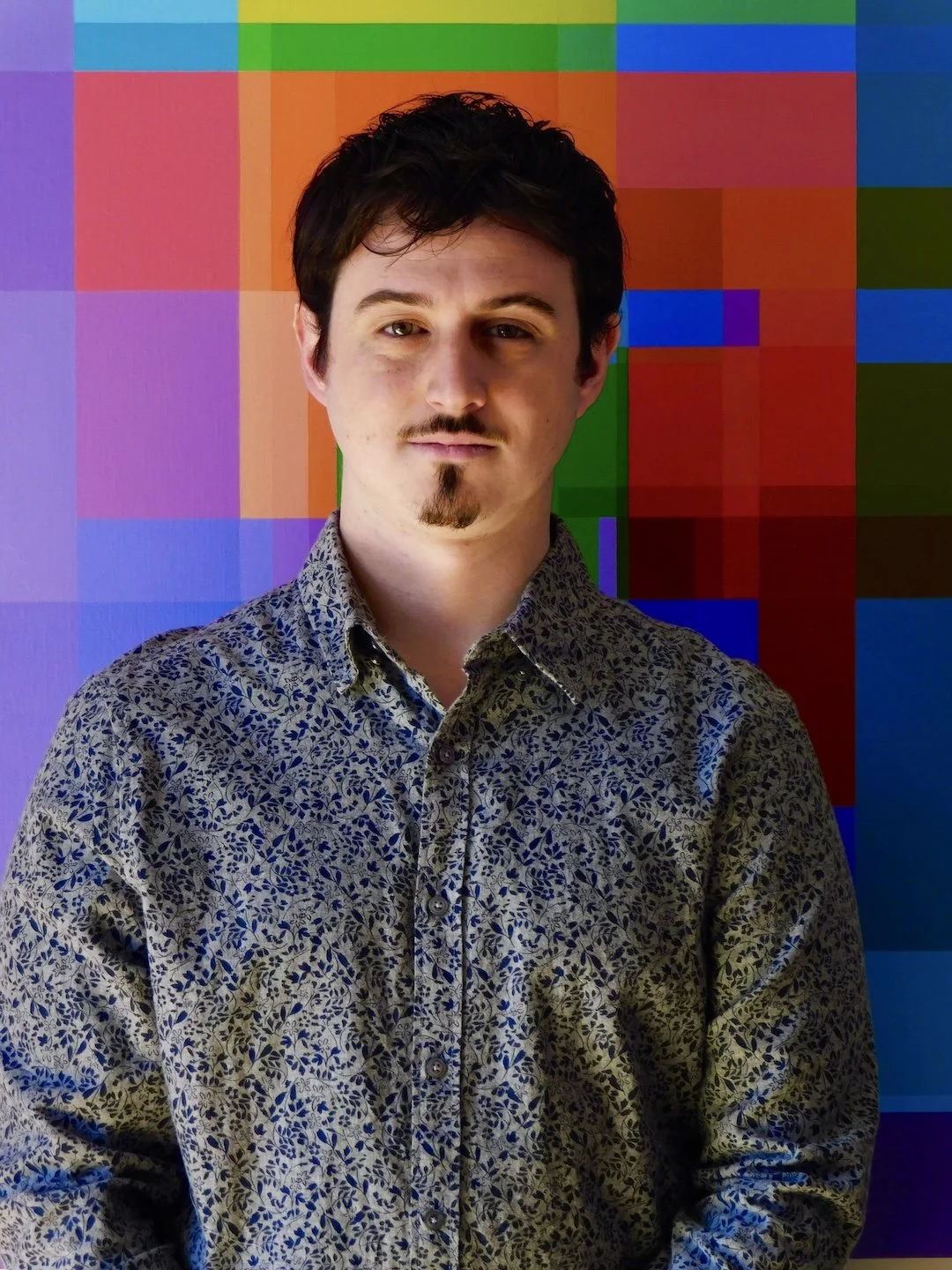
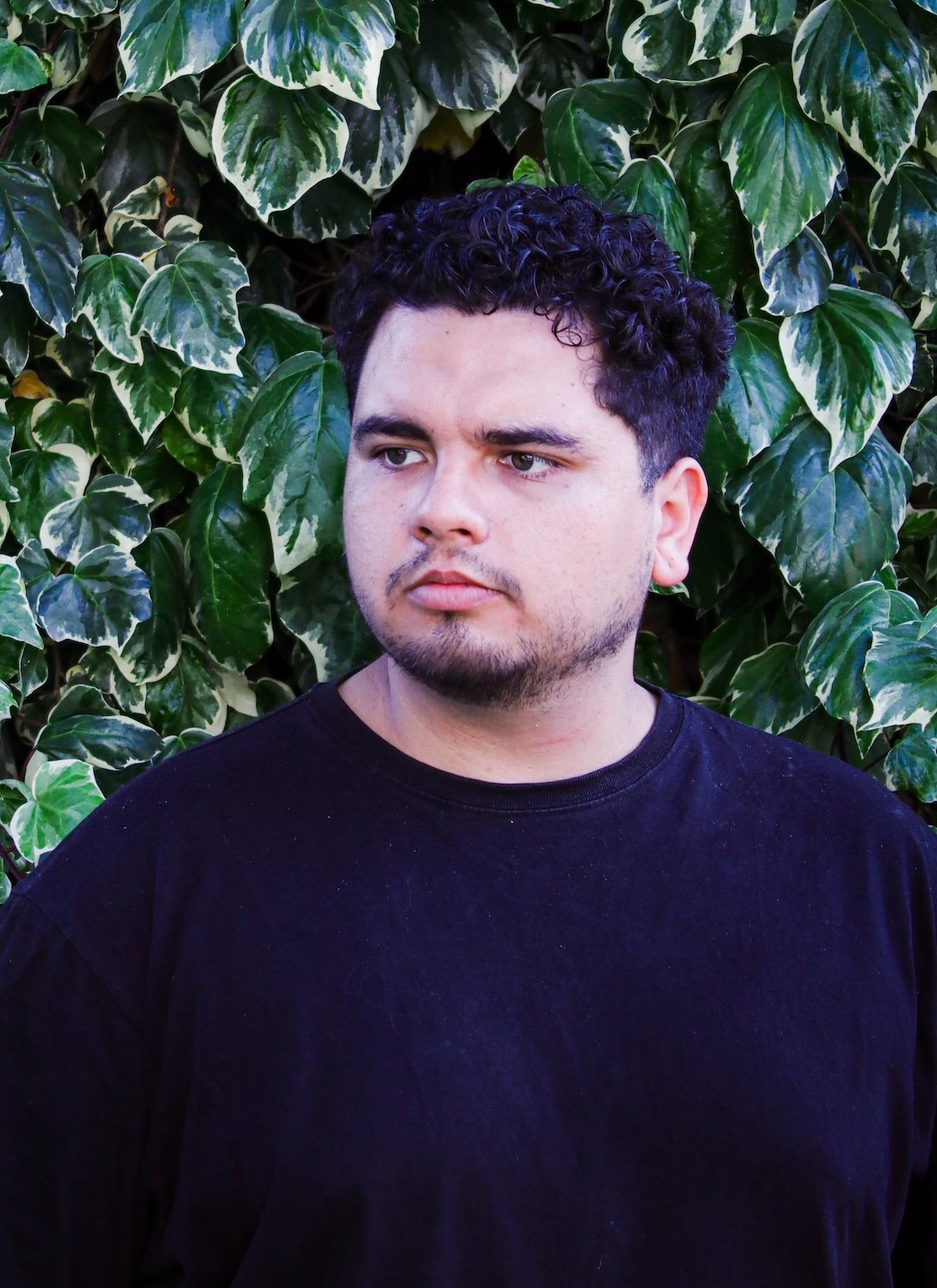
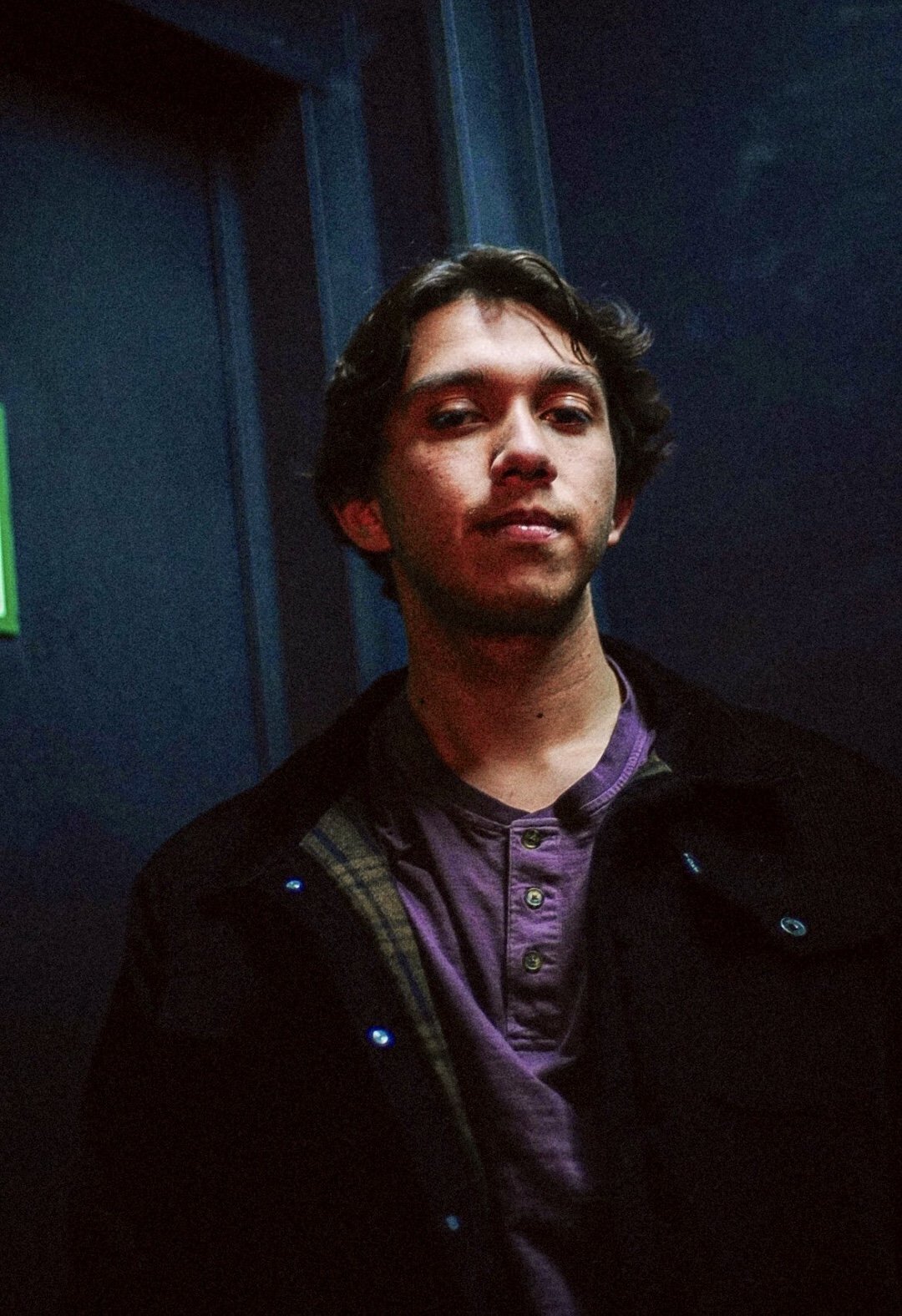

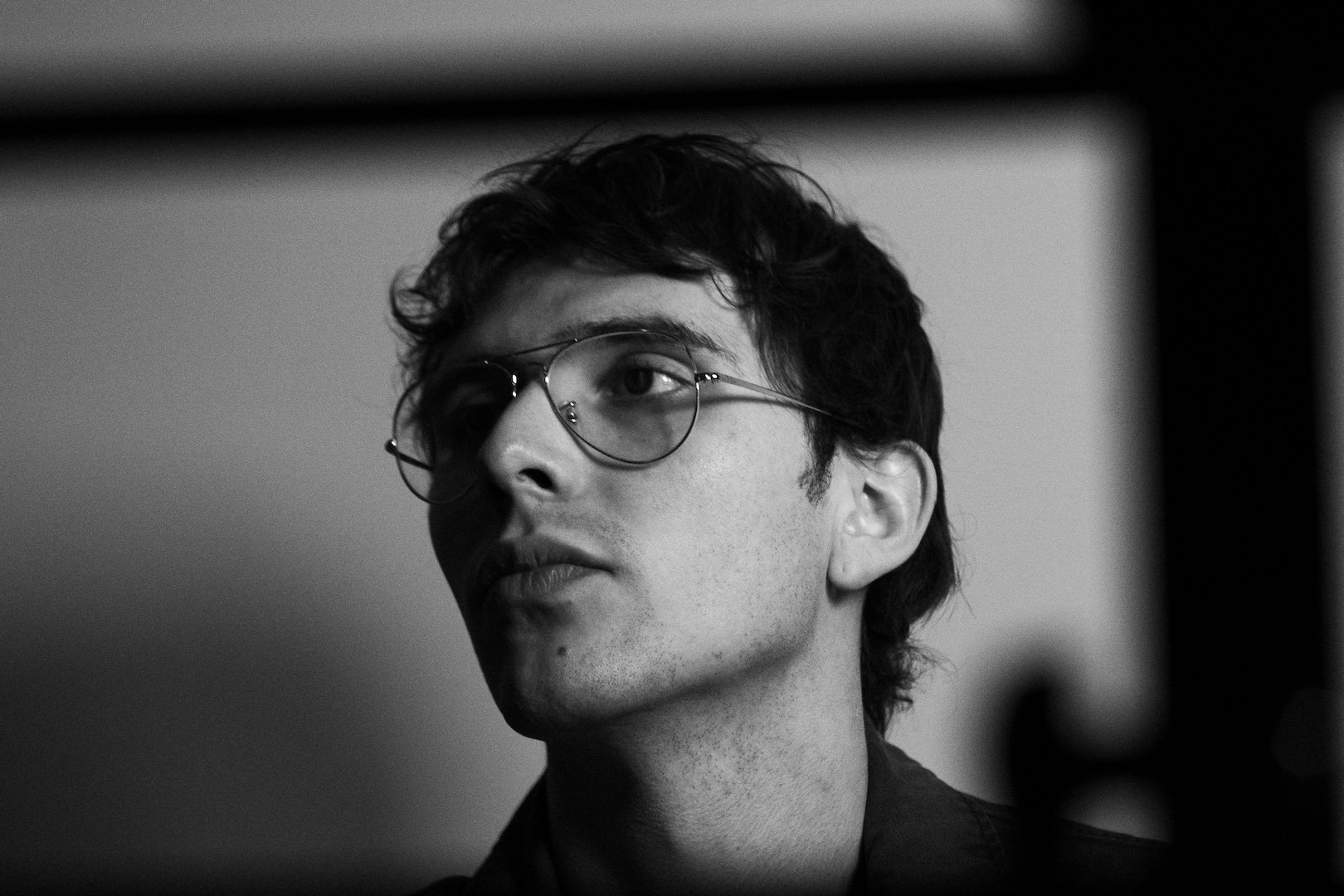
Featuring
the Spectacle Collective Quartet
with Scott Hill on guitar
Mi Mantita,
Seba Vergara
Made in Latinoamérica,
Matis Young
Donde Susurran los Cerros,
Cristóbal Cabrera
Canto,
Octavio Mena
Trinity Sunrise,
Yuliana Pandolfa
El Cielo Contraído en un Cuerpo,
Tomás Muñoz
Manifiesto,
Matías Guíñez
Florecer en un Desierto,
Gregorio Ried
Vuelve Aquí Ahora los Ojos
y Mira esa Nación,
Ivo Unrein
performing at
All Saints Parish, Brookline
Saturday, September 19, 2026
at 7:30 PM
Post-performance Q&A with visiting composers
Framingham Public Library
Sunday, September 20, 2026
at 3:00 PM
Post-performance Q&A with visiting composers
Ashland Dragonfly Street Faire*
Saturday, October 3, 2026
at 1:00 PM
(*Common Chords is one of several performances at this outdoor festival)
Newton Public Library
Sunday, October 4, 2026
at 2:00 PM
All performances are free
and open to the public.
Program
» tap/click for program notes & composer bios.
Made in Latinoamérica
— Matis Young
Mi Mantita
— Seba Vergara
Manifiesto
— Matías Guíñez
Vuelve Aquí Ahora los Ojos y Mira esa Nación
— Ivo Unrein
Trinity Sunrise
— Yuliana Pandolfa
Canto
— Octavio Mena
Donde Susurran los Cerros
— Cristóbal Cabrera
Florecer en un Desierto
— Gregorio Ried
El Cielo Contraído en un Cuerpo
— Tomás Muñoz
Subaiou Carter and Nicole Wendl, violins
Jessica Cooper, viola
Tyler Michael James, cello
Scott Hill, guitar
About the Program
Made in Latinoamérica
Matis Young
In the composer’s own words:
Made in Latinoamérica was written from a desire to explore some of the musical experiences, memories, and contradictions of living in Latin America. Rather than representing a particular country or musical tradition, the piece brings together different sounds, gestures, and ways of listening that have become part of my own experience as a musician in Chile.
The title refers not only to where the music comes from, but also to the idea of Latin America as something continually being made: shaped by history, migration, popular culture, violence, celebration, and everyday life. At the same time, Made in Latinoamérica carries a more political meaning. It evokes the possibility of producing from Latin America on our own terms: of making something that does not merely consume, reproduce, or imitate what comes from elsewhere, but asserts its own capacity to exist, produce, and create.
In this sense, the piece understands itself as a small, concrete act of production. It does not claim to represent Latin America, but to take part in the ongoing struggle for its cultural and productive sovereignty. The work is one personal way of imagining—and producing—something Made in Latinoamérica.
— Matis Young
MATIS YOUNG MANTELLERO is a Chilean composer, pianist, singer, and music educator based in Viña del Mar. He completed the Popular Music Composition and Arranging program at Escuela Moderna de Música y Danza in Santiago, where he currently teaches composition in the same program. His compositional practice explores connections between Latin American music, jazz, experimental music, and contemporary composition, with a particular interest in rhythm, timbre, improvisation, poetry, and the relationship between written and performed music.
Young Mantellero is the founder, musical director, composer, pianist, and singer of Tucúquere, a Chilean ensemble centered on the Latin American song tradition, vocal arrangements, and improvisation. He is also the founder, musical director, composer, and pianist of Maquinaria, an experimental electroacoustic ensemble that explores the intersections of Latin American music, jazz, poetry, and performance through electric and electronic sonorities.
His work has received recognition through the Musicalizando a Gabriela Mistral competition, organized by the Embassy of Morocco in Chile and Escuela Moderna, as well as the Escuela Moderna piano composition competition. His music has been performed by the Cuarteto de Saxofones Oriente, directed by Miguel Villafruela. In 2026, his string quartet will be premiered in the United States by Spectacle Collective.
Mi Mantita
Seba Vergara
In the composer’s own words:
“Mi Mantita” (My Warm Blanket) is a composition based on a "Huayno", a folk rhythm associated with the antiplanic zone of Peru, Bolivia, northern Argentina, and northern Chile.
In this case, I am adapting the guitar to the role normally played by the charango, and the strings would be fulfilling the role of wind instruments such as the “Quenas” and “Zampoñas.”
For me, this composition signifies freedom, introspection, self-care, and self-knowledge, where the cello's song represents our deepest thoughts, the counterpoint of the strings represents shelter and self-love, and the guitar represents the vehicle that moves us through our journey in this world.
— Seba Vergara, 2026
SEBA VERGARA is a 24 year old musician and composer from Constitución, Chile, and currently a student of composition and arranging at Escuela Moderna de Música in Viña del Mar, Chile. His artistic voice is characterized by a focus on composition rooted in Chilean and Latin American folk music, through a contemporary view of composition and musical production.
Seba’s musical journey began in 2017 as a pianist and singer with the Coro Municipal in Constitución, also participating in the Orfeón and Big Band community ensembles. Since 2018 he has developed a catalogue of his own compositions that have been performed in various concerts and cultural events.
As an arranger, he has worked for Francesca Ancarola and Paz Court on the project, “Mujeres Creadoras” (Women Creators), with support from the Cultural Council of Providencia. He has also made arrangements for the Ensamble Quinta of the Escuela Moderna (Chile), which were presented at the inaugural Jazz Festival of Valparaíso (Chile). In 2025, he was a winner of a competition organized by the Embassy of the Kingdom of Morocco in Chile in homage to Gabriela Mistral, composing a piece inspired by one of Mistral’s poems and earning official recognition. That same year, Seba was a composer, producer, and performer on an album in homage to Lucila, published by Balmaceda Arte Joven. He has composed original music for visual art installations, including for “Inviernos” (Winters) by the company, Dalia Negra Cia—an installation that has received great acclaim—and projects with contemporary dance, developed through an interdisciplinary creative process.
Since 2022 Seba has worked teaching piano, music theory, composition, and songwriting, working with students of all ages. Additionally, he has gained experience working on cultural events in both management and production with the Cultural Council of Constitución. As of today, he has released one EP (2024) and a variety of singles that have been published between 2024 and 2025 on digital platforms. His work integrates creation, production, teaching, and cultural events management, bringing together his artistic mission with a territorial identity and dedication to music rooted in folk traditions.
Manifiesto
Matías Guíñez
In the composer’s own words:
“Manifiesto” recounts my experiences in Santiago amid the uprising of October 18, 2019. This work embodies the fear provoked by the sound of police sirens, the suffocation of tear gas clouds, the constant screams that echoed in those days, the rising pots-and-pans protests that, like a canon, swelled in volume, and, in a very personal way, the utterly mocking reaction of some people who, when a group of dogs attacked and bit me as I watched the demonstrations, could only laugh at a young man who believed he was seeking the same thing they were: respect and equality.
This musical piece aims to capture the feeling of being in the middle of a completely corrupt world — a world that, even when people clearly voice their needs, will not be willing to listen; all it does is repeat, over and over, the same chain of injustices.
— Matías Guíñez
MATÍAS GUIÑEZ PÉREZ, composer from Santiago, Chile, studied composition at Escuela Moderna de Música, where he graduated with highest honors under the guidance of composer Javier Farías. His work includes music for film, contemporary dance, and chamber music, with a particular interest in exploring personal memories and experiences through current musical languages.
He has collaborated with Cuarteto Nothofagus, with whom he premiered his string quartet Memorias de un Desconocido in 2024. The work was performed twice that year and later presented as part of the Ecos Nativos tour in 2026, with performances in Puerto Varas, Panguipulli, Cunco, and Padre Las Casas. His film scores have also been featured in audiovisual projects screened at Chilean festivals including FicValdivia, SANFIC, FIDOCS, and FECILS.
He currently develops instrumental and audiovisual projects that combine acoustic and electronic music, with a focus on memory, identity, timbre, and sonic experimentation.
Vuelve Aquí Ahora los Ojos y Mira esa Nación
Ivo Unrein
In the composer’s own words:
"Vuelve aquí ahora los ojos y mira esa nación" is a piece for string quartet that comes from this latter idea. I've taken as inspiration Virgil's warnings and reminiscences on Aeneas' long grueling voyage, as acute today as they were in his time if not more, rather than his propagandistic goals. Different currents clash and mix together, Chilean folk music motives drowned out between the turmoil.
— Ivo Unrein
Born in Argentina, in the province of Santa Fe in 2002, I moved at a young age to Perú and later to Chile, where I studied Composition at Escuela Moderna de Música y Danza. This childhood between countries is part of what motivates my creative process and my relationship with it and music in general: the distances between lands revealed to me the common ground all cultures and human experiences have and, since then, I've engaged in a conversation with them; home countries are mirrored in the rest, and nowadays relates to yesteryears.
Trinity Sunrise
Yuliana Pandolfa
In the composer’s own words:
Trinity Sunrise is a work that seeks to guide the listener through a variety of sonic textures, moving from an initially minimalist and contemplative atmosphere into moments of greater tension, and ultimately returning to peace. Inspired by the Christian Trinity, this piece is born from the conviction that in God dwell fullness, purpose, and the true calm of the soul.
Through serene sonorities, spaces of meditation, and emotional contrasts, the work seeks to express that, even in the midst of anguish and uncertainty, peace ultimately prevails.
Trinity Sunrise symbolizes precisely that light which reappears—that promise of hope that never fades.
— Yuliana Pandolfa
Yuliana Pandolfa is a Chilean composer, arranger, singer, and producer whose music blends contemporary minimalism with cinematic storytelling. Inspired by the power of simplicity, she creates works that seek to convey peace, hope, and emotional depth. Having studied at Escuela Moderna de Música (Chile) and Berklee College of Music, Yuliana believes music can become a place of reflection—a space where listeners can pause, breathe, and reconnect with hope.
Canto
Octavio Mena
In the composer’s own words:
Singing is an instinctive human action. It is suggested that its origin lies in primitive forms of communication, which, through intonation and rhythm helped coordinate different group activities such as hunting or rituals.
Therefore, it is believed that singing predates spoken language, as it exists in other species such as birds and whales.
As civilization evolved, singing began to respond to new societal needs, such as religion, artistic expression, the preservation of stories, entertainment, and so on.
Today, the act of singing is deeply connected to emotion. We sing to unburden us; to let go of pressure; to feel better. It can shift through states as disparate as joy and anger in a matter of seconds, depending on the intention behind it.
Canto (Chant) is a piece that attempts to reflect the act of singing as a collective release. It unfolds through different melodic motifs that appear and mutate over time, supported by a rhythmic character that acts as a powerful engine, propelling us toward the explosion.
Each instrument is a voice that contributes lyricism and energy, transforming the work into a conversation of interwoven and sometimes diffuse melodies that converge in a fluid, dynamic, and energetic journey. They become a song that transcends emotional boundaries, shaped by the musician's feelings at the moment of performance and, in turn, by the listener's emotions. A chant that becomes a cry, full of vehemence, like a war cry against the wind.
Thanks to Spectacle Collective for the wonderful opportunity to premiere this work.
Music is made through community; through the work and connection between composer, performer, and listener; and through peer support.
It is our responsibility to confront the current paradigms of how music is being made, in order to have a more humane and warm future.
— Octavio Mena
Octavio Mena (b. 2002) is a composer from Santiago, Chile. Working primarily in the field of instrumental music, he frequently collaborates across disciplines such as film, dance, and theater.
His works have been premiered by various ensembles and soloists, including a piece for string orchestra performed by the Orquesta Marga Marga, a work for the Cuarteto de Saxofones Oriente, as well as pieces for solo piano and flute trio. Currently, he is also active as a guitarist and composer in rock and electronic music projects.
Donde Susurran los Cerros
Cristóbal Cabrera
In the composer’s own words:
“Donde susurran los cerros” (Where the Hills Whisper) is a work born from memory and from a territory I claim as my own. I envision it as a journey toward the “interior” of the Tarapacá Region in northern Chile (a highland zone near the Andes mountain range.) It is a transition that is both geographic and deeply spiritual, emulating the ascent from the coast toward the “pre-cordillera” and the “altiplano”. The piece serves as a tribute to the routes connecting towns such as Huara and Pica, ultimately leading to Mamiña, the place where a branch of my family originates.
With this composition, I seek to capture the acoustic identity of the desert and the mutation of its atmosphere through the passage of hours and seasons. The sound of the wind, so prevalent in the pampa and the ravines, gives the work its name and intertwines with the Cachimbo, the emblematic dance of the region. Rather than relying solely on folkloric quotation, I present its characteristic melodies and rhythms to deconstruct and reinterpret them through the language of chamber music.
The Cachimbo functions here as the rhythmic core. Unlike other, more massive northern dances, this is a slow and elegant dance of courtship, reflecting the refined gallantry of the northern towns. Ultimately, the work becomes a personal sonic map—a bridge between my present and the roots of my upbringing.
— Cristóbal Cabrera
Cristóbal Cabrera Callpa, born in 2000, is a musician from the city of Iquique in northern Chile. His trajectory can be described as a path through diverse styles of music and a path centered on territorial identity.
In his early years, Cristóbal’s musical activities were linked to genres such as rock, including punk and indie rock, spaces that he began to participate in within the local scene. As time has gone on, his interests have moved towards the exploration and musical expressions of the place he is from. This process brought Cristóbal to incorporate classical guitar in the creole style with diverse Andean instruments, musical tools that he found established a link between cultural tradition and northern Chilean folk music.
A remarkable year in Cristóbal’s musical journey was 2021, when he began his formal musical studies. This academic step has allowed him to broaden his technical and conceptual knowledge, integrating influences from jazz and classical music, under the guidance of professors including Javier Farías. Along with this new knowledge, Cristóbal’s work has shifted focus into a more experimental phase that combines traditions from his birthplace with a newfound global language.
Currently, Cristóbal’s work centers itself both in the environments of traditional Chilean musics as well as instrumental composition, focusing on his interest in writing for guitar and other chamber music formats.
Florecer en un Desierto
Gregorio Ried
In the composer’s own words:
“Florecer en un Desierto” (To Bloom In A Desert) is a piece written for string quartet inspired by the “Desierto Florido” (Flowering Desert) phenomenon that occurs in the north of Chile, in the Atacama Desert, the driest desert in the world. Thanks to the climate event “El Niño” (The Boy) every three to five years there is an increase in the amount of rainfall in the region, causing over 200 species of flowers to bloom and to cover the vast plains of sand.
The music seeks to illustrate the opening of the flowers in this dry and hostile environment. Specifically the Anthesis, the period that results in the expansion of their petals and colors, until it is fully developed and functional. It marks the peak of the flower’s life, and in some cases, it can even mean a complete change of structure and form. The piece evokes the energy and beauty of this process, imitating the erratic and natural growth of the flowers during the “Flowering Desert”.
Special thanks must be given to my teacher Javier Farías and my friends Octavio Mena and Tomás Muñoz for their guidance, counsel and willingness to help me during the writing of this piece, as their help and critique were crucial in the development of the music.
— Gregorio Ried
Gregorio Ried is a Chilean composer born in 2002 whose work lies at the intersection of chamber music, electronic music, and progressive music. His output includes works for string quartet, string orchestra, hybrid electro-acoustic ensembles, and experimental electronic projects.
His compositional practice focuses on rhythm, texture, form, and timbre as expressive tools. Drawing on his personal experience of Chile’s diverse landscapes, his music reflects on themes of solitude, scale, and time, shaping reflective sonic narratives.
El Cielo Contraído en un Cuerpo
Tomás Muñoz
In the composer’s own words:
This piece is inspired by the conception of the Mapuche People, the ancient inhabitants of the lands where I was born.“Mapuches”. Within their culture, there is a strong belief in the cosmic spirit that exists above us, and also in the divine forces of nature, often represented by spiritual entities.
One of the most meaningful concepts for me is the word "Wentru". Commonly translated as man, but a deeper interpretation reveals a poetic idea: “a sky contracted within a body.” In this sense, the living creatures are understood as fragments of the cosmos, spirits that fell into the earth, and in his journey, and through their journey, become one with nature.
As a young Chilean composer in the 21st century, I find this perspective distant and deep. Nowadays we live in a society shaped by constant human intervention, where the connection with nature feels every day more lost. The Mapuches worldview shows us a different way of walking in our lives, one that´s more attended, respectful and connected to all the things that are happening around us.
This piece attempts to capture that vision in sound in a contemporary and honest way. Recognizing that the past cannot be recovered, it suggests the possibility of building a new reality—one in which we rediscover ourselves as part of the cosmos and nature, and where we embrace our responsibility to care for the world we inhabit.
— Tomás Muñoz
Tomás Muñoz (Santiago, Chile, July 19, 2002) is a Chilean composer, arranger, and multi-instrumentalist. He began his musical training at the age of 15 as an electric guitarist, developing a strong interest in progressive rock, psychedelia, and sound exploration.
In 2021, he began studying Composition and Arranging at Escuela Moderna de Música y Danza, where he has focused on contemporary writing techniques, orchestration, and musical analysis. His compositional work includes pieces for various instrumental ensembles, including the Oriente Saxophone Quartet, Orquesta Marga Marga, and projects within the popular music scene.
Alongside his work as a composer, he has developed as an arranger of popular music, collaborating with artists such as Dulce y Agraz, Olivia García, KYA, and Celeste Shaw.
About the Performers
Subaiou Zhang Carter
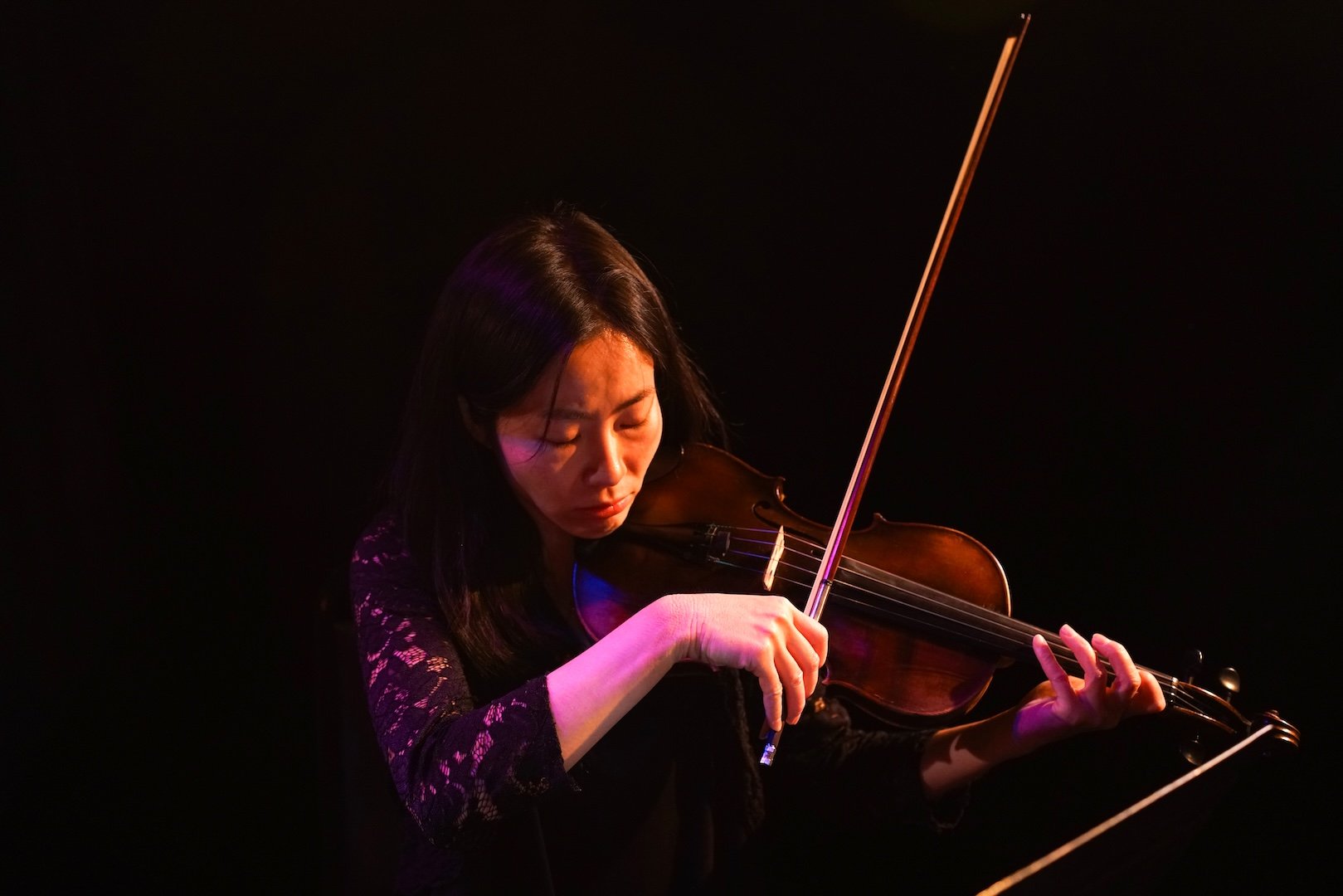
SUBAIOU ZHANG CARTER, a native of China, holds a Doctor of Musical Arts degree (2021) in Violin Performance from Boston University. Her dissertation was on the integration of Chinese musical elements in contemporary violin repertoire. In recent years, Subaiou has served as concertmaster in Carlisle Chamber Orchestra, Portsmouth Symphony, and Lowell Chamber Orchestra and will be performing Brahms Double Concerto with Carlisle Chamber Orchestra in March 2027. Outside of music, Subaiou can be found spending time with her family or in the dojang practicing traditional-style Taekwondo.
Nicole Wendl

NICOLE WENDL is an empathetic and dedicated leader. In her work with BUTI, she realizes a vision for an equitable and inclusive future of music based in community growth alongside students, faculty, staff, and supporters. As a professional violinist, Nicole serves as associate concertmaster in the Portsmouth Symphony, previously as associate concertmaster of the Opera Neo orchestra in San Diego, and has held various other chairs in orchestras up and down the east coast. She holds an undergraduate degree in music education and graduate degrees in violin performance and chamber music literature. Nicole is a former member of the prestigious Giannini String Quartet and performs on a violin by maker Andrew Ryan, Providence, RI. Outside of the office and off of the stage, Nicole is a voracious reader, salsa dancer, fitness instructor, and a dedicated friend and family member.
Jessica Cooper

JESSICA COOPER is a Boston based freelance violist. She is a member of the Cape Cod Chamber Orchestra and serves as principal violist for the Lowell Chamber Orchestra, while collaborating regularly with various other ensembles across New England. Jess earned both an MM and PD in viola performance at Boston University under the tutelage of Daniel Doña and Michelle LaCourse. Apart from performing, Jess is also currently an upper strings teacher in the Shrewsbury Public Schools and in her own studio where she is on a mission to convert as many violinists to violists as possible. When Jess is not spending time with her viola, she enjoys testing out New York Times recipes and open water swimming at Asnacomet Pond.
Tyler Michael James
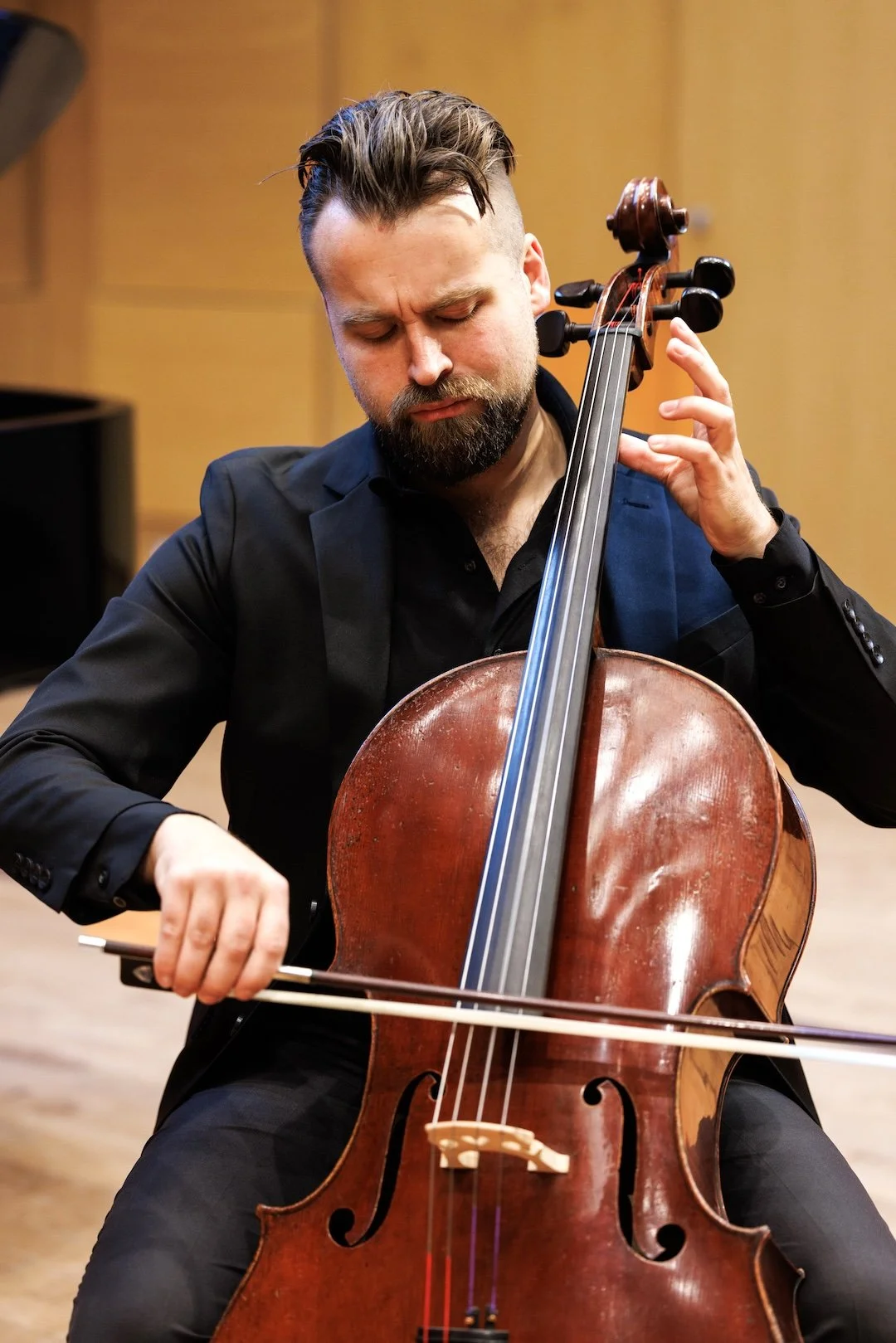
Recognized as “masterly” with a “soulful, lyrical tone” (Boston Music Intelligencer), cellist TYLER MICHAEL JAMES has established a multifaceted career as a soloist, chamber musician, and advocate for contemporary music. He has performed on recitals at Carnegie Hall, the Metropolitan Museum of Art, the 92nd Street Y, and Rockport Chamber Music Festival, collaborating with acclaimed artists such as Peter Zazofsky, Ayano Ninomiya, and Doris Stevenson. James has been a featured soloist with the Vision Ensemble, New York University Symphony, Longy Orchestra, and the Virginia Governor’s School for the Arts. His upcoming season is highlighted by a performance of Beethoven’s Triple Concerto with the Ridgefield Symphony. A dedicated chamber artist, he is a founding member of the Tristan Trio, the Finehouse James Duo, and the Garrison Quartet, and has performs regularly with premier ensembles including A Far Cry, Castle of our Skins, the Rhode Island Philharmonic, and Fermata.
Scott Hill
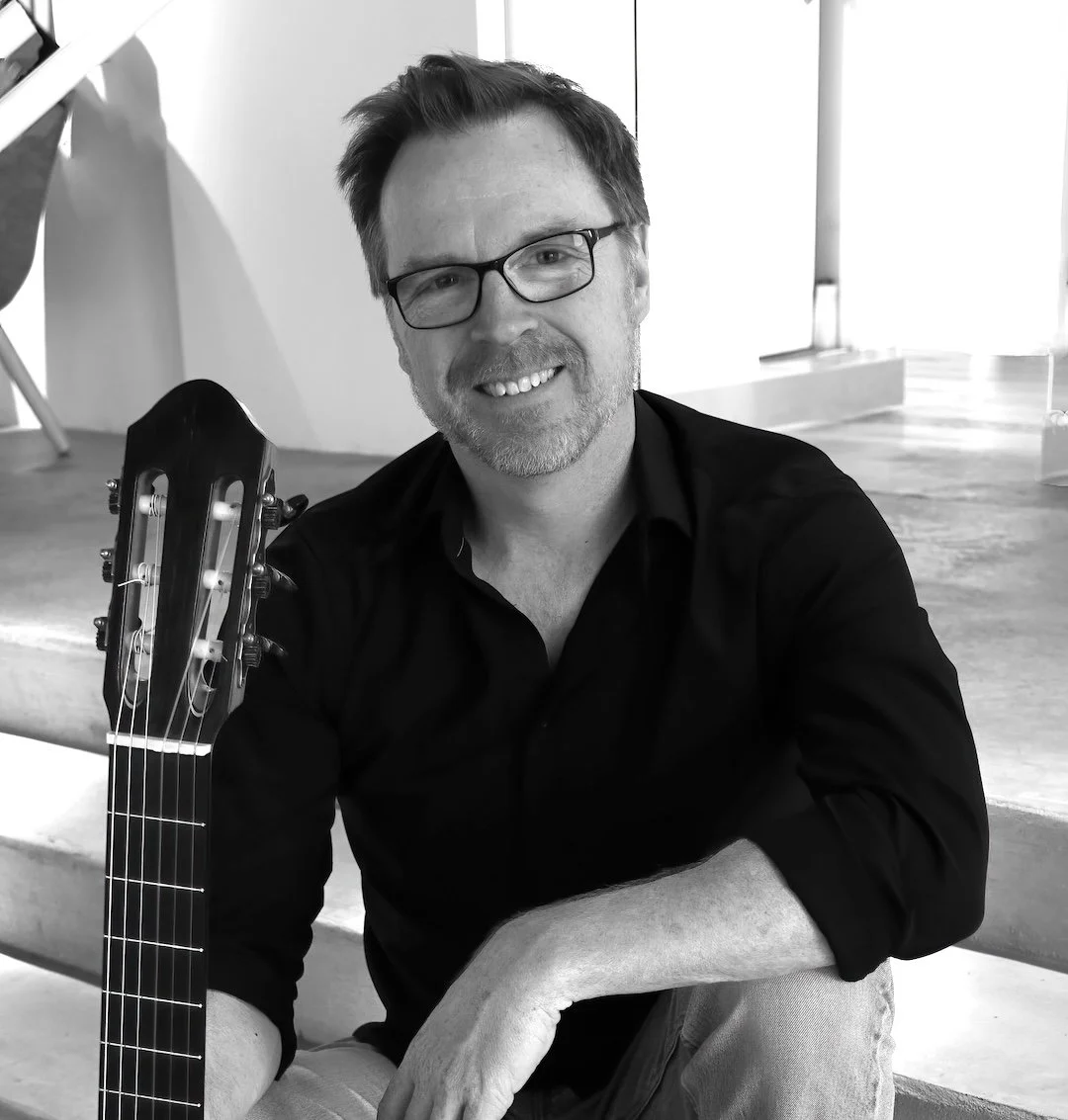
SCOTT HILL, guitarist, has performed with orchestras, choirs, instrumentalists, and vocalists throughout Canada, United States, Europe, and South America as a soloist and chamber musician. As a member of the Alturas Duo, collaborator and soloist, Mr. Hill has premiered more than eighty pieces of new music, has won the Chamber Music America/ASCAP Adventurous Programming award, he has been awarded grants from New Music USA commissioning grant, the Chilean Arts Council, the Canada Arts Council and is also a laureate winner of the World Folk Vision awards. He has collaborated with a wide range of instrumentalists and ensembles including bandoneon player, Daniel Binelli, Cuarteto Latinoamericano, the Fairfax Symphony Orchestra, Callisto Quartet, East Coast Contemporary Ballet, Vista Philharmonic flutist Melanie Chirignan and the Voce Choir of Hartford. He has recently premiered music by Leo Brouwer, Javier Farias, Karina and Javier Contreras, Olga Amelkina-Vera, Thais Nascimento, and Vera de Andrade. In addition to his work with the Alturas Duo, he is a former Play USA/Carnegie Hall Lead Teaching Artist and Suzuki qualified guitar instructor who maintains a private teaching studio in Stamford, CT. He has recently given masterclasses at the Familia Assad Music Festival in Brazil and has judged at the Columbus Guitar Symposium in Georgia, US. Mr. Hill earned an Honours in music from Lakehead University; a Master of Music in Guitar Performance and a Graduate Professional Diploma in chamber performance from the Hartt School of Music.
Many Thanks
Common Chords is sponsored and supported by the Ashland Cultural Council, Brookline Commission for the Arts, Framingham Cultural Council, Mass Cultural Council, and Newton Cultural Council.





Thank you to colleagues and friends who lent their time and resources to help us put together this production.